Guide
Mounting and balancing, explained
New wheels and tires are only as smooth as the install. Here's what a good shop does.
The short answer
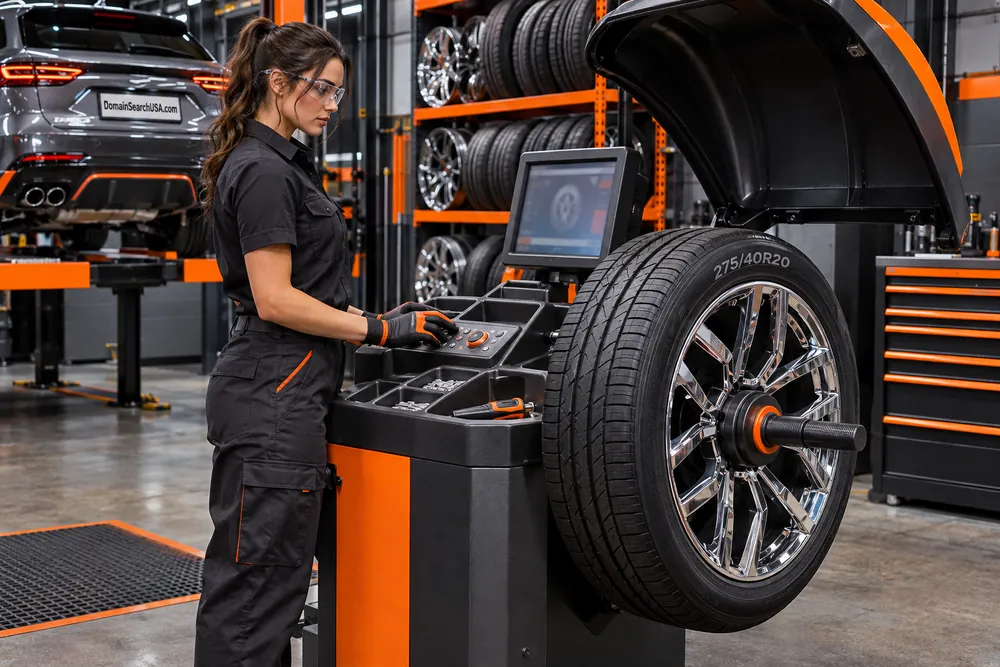
Mounting puts the tire on the wheel; balancing adds small weights so the assembly spins without vibration. Ask for a road-force balance on large or low-profile wheels, new valve stems or TPMS service kits, and a torque-wrench finish on the lug nuts.
What happens at the shop
- The tire is mounted on the wheel with a tire machine; touchless machines protect custom finishes.
- Valve stems or TPMS service kits are replaced.
- The assembly is spun on a balancer and weights are added.
- Wheels go on and lug nuts are torqued to spec.
Road-force balancing
A roller presses on the tire to simulate the road, finding stiff spots a standard balance misses. Worth it on big, low-profile wheels.
Signs you need balancing
- Vibration in the steering wheel at highway speed
- Uneven, scalloped tread wear
- After hitting a big pothole
Rotation
Rotate tires about every 5,000 to 7,500 miles, or as your owner's manual says, for even wear.
Gear for this job
As an Amazon Associate we earn from qualifying purchases. Links go to Amazon search results so you can compare options and prices.
Updated November 24, 2026. General information; confirm fitment, specs and torque values for your exact vehicle.